

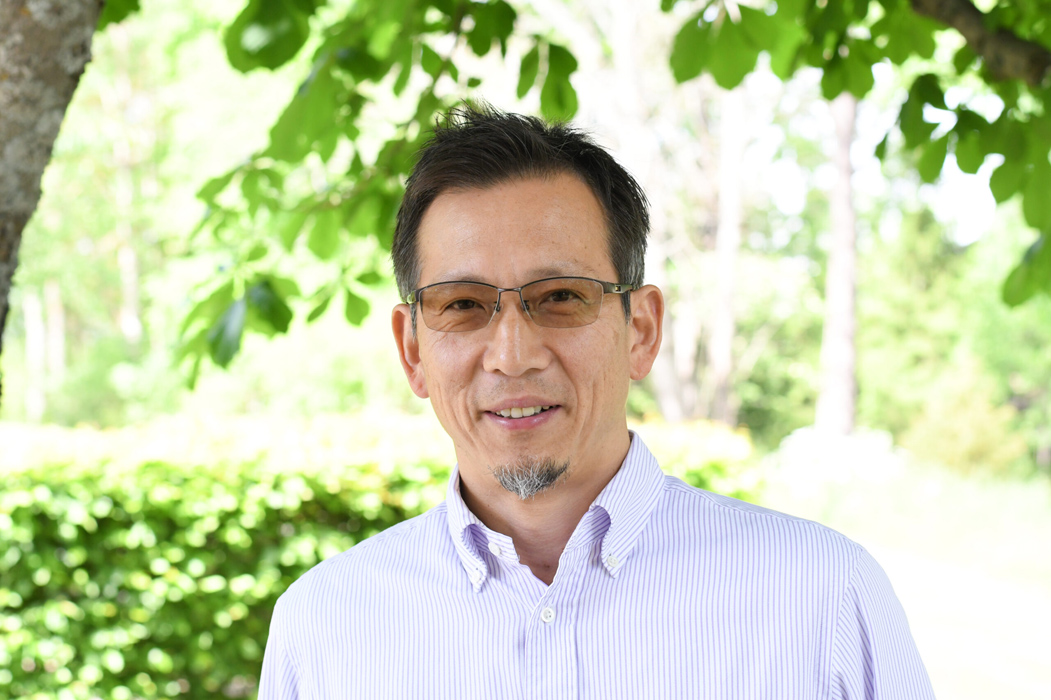
Scientist, consultant, and educator at Linköping University in Sweden.
Sakao is a well-known international researcher in product-service systems and circular economy models, especially in domestic contexts. In particular, he studies how design, technology, and behaviour combine to reduce environmental impacts in industrial models.
In this conversation, Professor Tomohiko Sakao offers an academic and systemic perspective on the transition from individual ownership models to product-service systems in the domestic sphere. He highlights shared laundry services as a paradigmatic example of efficiency, where resource savings and material optimization achieve a greater environmental impact than simply reducing energy consumption. Through his research, Sakao explains how the success of these models does not depend solely on technological robustness, but on a deep understanding of user behaviour and adaptation to the socio-economic context of each city. His analysis invites us to rethink industrial design from a life-cycle and digitalization perspective, shifting the focus from the physical object to the provision of an easy and durable service, capable of overcoming the reluctance of immediacy and other cultural barriers.
Listen the original interview
What does scientific evidence tell us about the environmental impact of moving from an individual ownership model to a shared laundry system?
The general trend in research shows that Product-Service Systems (PSS) offer positive environmental benefits compared to individual product sales and usage. According to our studies, resource efficiency is the category where the impact is most significant, even above the reduction of energy consumption or CO2 emissions. Sharing not only optimizes the use of the machine but also reduces the total amount of materials needed to serve a community.
To what extent does user behavior influence the efficiency of these systems?
It is a key factor. Although it is difficult to strictly separate technical barriers from user-related ones, behavior greatly influences actual consumption. For instance, the amount of laundry you put in each cycle can cut consumption by up to 50% if the load is optimized. Another determining factor is water temperature: heating water to 60 or 90 degrees consumes a lot of energy, and the decision to choose the appropriate temperature depends entirely on the user’s habits.
What conditions are necessary for a shared laundry to function correctly at a logistical level?
There are two critical factors. The first is the ratio of users per machine; if there are too many people for a single washing machine, both the resource impact and service satisfaction are affected. The second is maintenance. Washing machines can break down, and users need them to be fixed quickly. If the maintenance service is slow, there is a risk that the user will lose trust in the shared system and decide to buy an individual washing machine for their home again.
Are there cultural or contextual differences that make these models work better in some places than others?
Absolutely. A study by the University of Tokyo compared the use of shared laundries in Tokyo and Bangkok, and the needs were opposite. In Tokyo, these facilities are used for special purposes, such as washing very large items (like duvets) that do not fit in small domestic machines. In Bangkok, however, 40% of the population does not have a washing machine at home, so the shared laundry is for daily use. This teaches us that a model cannot be copied from one place to another without understanding the socio-economic context and the real needs of the people.
What are the main risks or mistakes observed in the implementation of these schemes?
A significant risk is the rebound effect on behavior. For example, in Sweden, it was observed that if the user does not pay directly for electricity (because it is included in the community fee), they tend not to worry about shortening the machine’s usage time. On the other hand, there is a curious trend: in some apartment complexes in Sweden, people have started buying individual washing machines despite having shared ones in the building. The main reason is 24/7 access and immediacy, especially in families with small children. This creates a complex scenario where both models coexist, and as planners, we must know how to manage this duality.
What should change in product design and public policies to favor these models?
We need to move from designing a physical product to “systems thinking.” Designing for shared use involves considering maintenance, repairability, and durability from the start. Companies that master this systemic approach will be the ones that truly succeed in the services market. At a policy level, green public procurement is a powerful tool to incentivize these models. It would also be necessary to rethink Extended Producer Responsibility (EPR) so that it does not focus only on the end of a product’s life, but instead encourages the manufacturer to care about the entire life cycle and long-term durability.
How do you see the future of shared services in the domestic sphere?
The trend is clearly upward, driven primarily by digitalization. We have already seen this with shared cars or scooters; technology facilitates payment, user recognition, and management through apps. In the case of laundry, the future lies in making more durable machines that can serve more users and integrating technological solutions that make the experience as convenient as, or even more so than, having a machine at home.
share