


Nature has spent millions of years developing solutions to adapt, optimize resources and respond to its environment. Biomimicry involves observing these strategies and applying their underlying principles to engineering, design and industrial innovation.
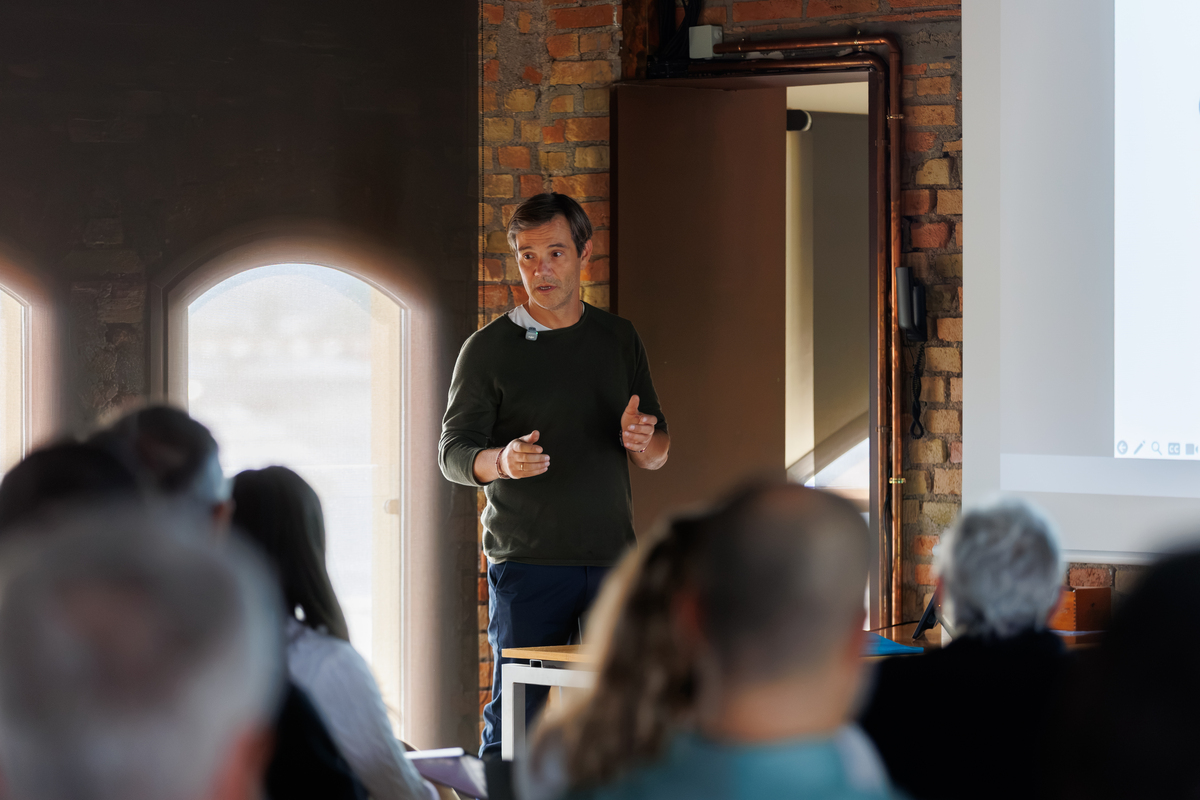
At a new session of the Girbau LAB Innovators Club, we welcome Carlos Sáez Comet, who holds a PhD in Polymers and Biopolymers, a Master’s degree in Materials Engineering and a degree in Mechanical Engineering. He specializes in material selection, development and industrial scale-up of materials, products and processes.
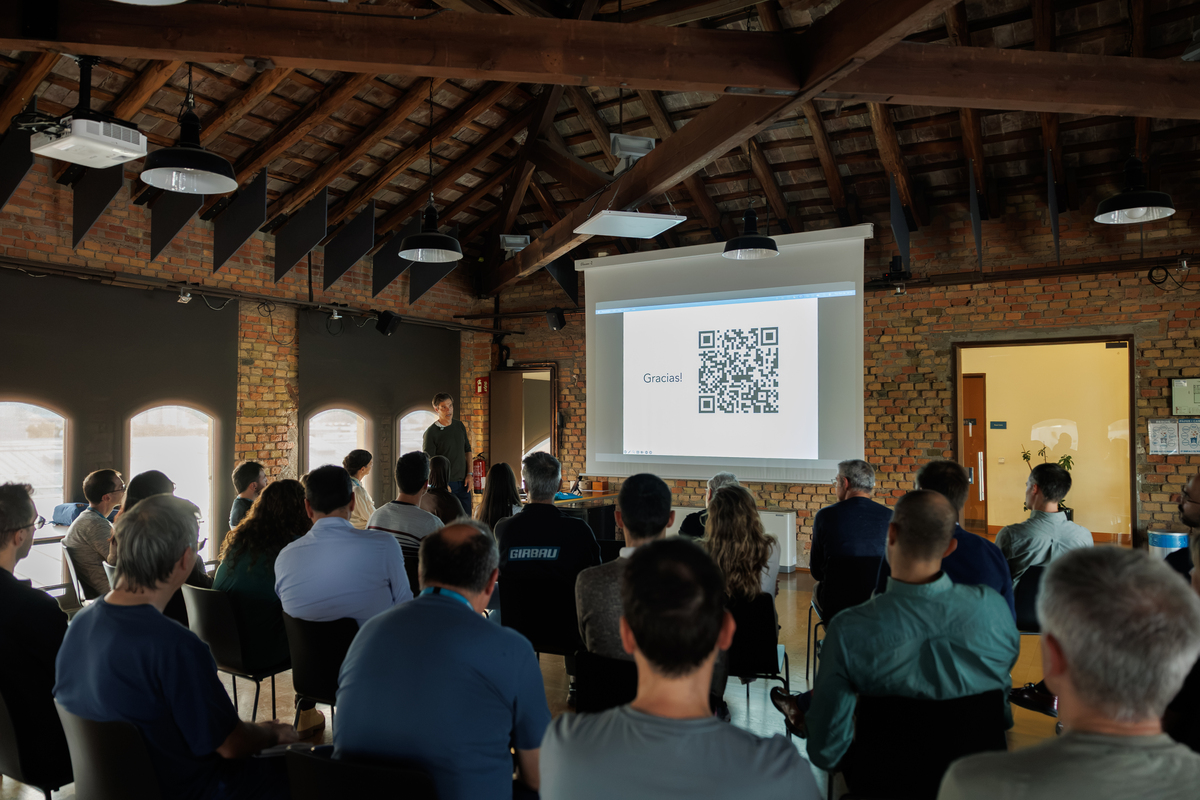
During the session, Carlos explores the potential of biomimicry to transform industry, develop new materials and optimize processes. Through real-world examples and applications, he examines how solutions found in nature can inspire new ways of designing, innovating and caring for textiles.
What can nature teach us about tackling the major challenges facing engineering and design?
Nature can teach us a wide range of optimized strategies for designing products, processes, systems and more. These strategies can help optimize different aspects of a product or process, such as raw material and energy consumption, sustainability, functionality and integration into the surrounding environment.
How does biomimicry translate into real innovation? Can you share an example of a material, product or process inspired by nature?
Biomimicry translates into real innovation through optimized designs of products and processes, or even entire industrial ecosystems, in terms of functionality, resource consumption and sustainability.
Many examples have been featured in the media over recent years. Some that I find particularly interesting include:
- The use of micro- and nanotextures found on shark skin to develop film materials that can be applied to aircraft surfaces. These films reduce the aerodynamic drag of the aircraft fuselage and, consequently, its energy consumption, enabling significant reductions in fuel use.
- The design of optimized wind turbines inspired by observing and understanding the physical phenomena, specifically aerodynamic effects, occurring around the pectoral fins of humpback whales.
- Another classic example, dating back several decades and frequently cited, involves understanding the physical mechanisms that allow kingfishers to enter the water extremely smoothly, with almost no splashing, when diving vertically to catch fish. Understanding the physical principles behind this phenomenon has helped inspire designs applied to vehicles such as very high-speed trains.
During the Girbau LAB Innovators Club session, Carlos presented several examples from projects he has personally worked on, including Biomimat, developed for the AINIA technology center.
What role can biomimicry play in the transformation of industry?
Biomimicry is already playing an important role in transforming industry towards the design of multifunctional, optimised products and processes, delivering clear improvements in various aspects of sustainability while enabling significant advances in the performance of a wide range of products and processes.
When we think about the materials of the future, where should we be looking?
We should be looking towards sustainable materials made from a limited range of basic components, just as nature does. We should even consider materials composed of organic molecules, such as proteins, sugars and others.
It is also important to highlight that, in nature, materials and structures achieve their optimized properties through ordered structures at multiple hierarchical levels. In other words, natural materials are organized at the atomic and molecular scale (nm and μm), at the level of microstructures or grains (mm), and finally at the macroscopic scale (m).
What can we learn from nature to imagine new ways of cleaning, caring for and extending the life of textiles?
We can, for example, look at the micro- and nanoscale structures found in many plant and animal fibers. These structures give fibers specific properties when interacting with liquids (super hydrophobicity or superhydrophilicity), as well as structural color properties.
We can also look at how nature cleans and purifies water, for example in fast-flowing watercourses with high flow rates, through a combination of microorganisms, active oxygen and large quantities of bubbles.
When it comes to the durability and lifespan of different textiles, we can draw inspiration from:
- The types of materials nature use to create structural fibers.
- Different types of highly abrasion-resistant fabrics and structures found in nature.
- Micro- and nanostructures on fiber surfaces that make them easy to wash and can even produce structural colors without the need for pigments or dyes.
- Materials used as intermediate phases to bind fibers or fabrics together.
Looking ahead to 2050… how do you think we will wash our clothes?
Well, it is very difficult to predict, and I am not a specialist in this particular field, but I think we are likely to move towards much greater use of natural fibers and far fewer synthetic ones. This would prevent the release of such quantities of microfibers into the environment and, consequently, help avoid further worsening the problem of microplastics.
It is also possible that sustainable pigments and dyes will be used, either derived from organic colorants or produced through structural coloration (using micro- and nanostructures in fibers). This would largely eliminate the release of toxic additives currently found in plastics, as occurs, for example, with polyester fibers.
We may also see a significant reduction in the number of surfactants used (that is, substances that modify surface tension), or the use of alternative bio-based and biodegradable versions in detergents, alongside new ways for detergents to remove stubborn stains effectively.
share